Baby Panda: Dental Care
- 4.7
- Rating
- 50.00M
- Installs
- Free
- Price
 Analysis by App-foxy
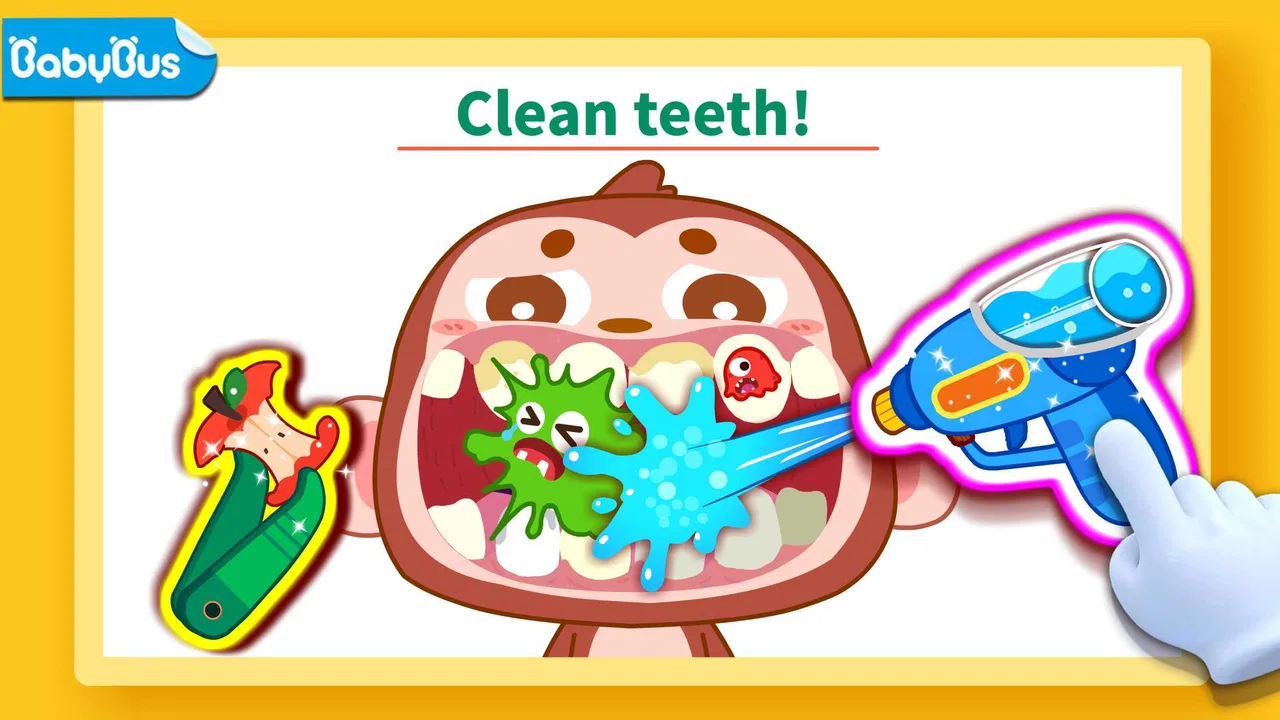
I approached Baby Panda: Dental Care as a small, friendly learning game rather than a substitute for a real dental lesson. Its central idea is simple: the child helps run a dental salon, looks after teeth, and follows care-related activities through playful interaction. That narrow focus is also its biggest strength. Instead of asking a young child to understand a broad health curriculum, it gives them one familiar subject to explore at a comfortable pace.
Developed by BabyBus, this free educational game is aimed at Everyone and works on Android devices running Android 6.0 or later. It has reached over 50 million installs and holds an average rating of 4.2 from around 30 thousand ratings, so it is clearly a well-established choice among families looking for early-learning entertainment. I would recommend trying it when you want a calm, topic-specific activity, especially before or after a real conversation about brushing and visiting the dentist.
How the dental salon feels in everyday use
The first thing I noticed is that the game’s appeal depends less on challenge and more on guided participation. A child is not being asked to master complicated rules or remember a long sequence of instructions. The dental-salon setting gives the activities a clear purpose, while the care theme makes the actions easier to connect with everyday life.
You May Also Like

 Blood Strike: 2.5 Anniversary
Blood Strike’s Loadouts Turn Every Drop Into a Tactical Gamble
A close look at Blood Strike’s custom loadouts: how fast access to signature weapons reshapes its battle royale rhythm, rewards preparation, and narrows the gap between fights.

 Pandora - Music & Podcasts
Pandora’s Music Is Easy to Start, but Harder to Recover
Pandora’s strength is its low-effort path from a seed to a station. Its weak spot is how much confidence it asks you to place in connection, setup, and quiet recovery.

 8 Ball Pool
 Is Built on Rivalries, Rematches, and Routine
A close look at the rivalries, rematches, shared routines, and unanswered safety questions that turn a quick pool match into a persistent mobile community.

 Samsung Music
’s Quiet Strength Is Playing What You Already Own
Its reach comes less from spectacle than from dependable access to a personal library. That simplicity is both the app’s strongest retention engine and its ceiling.

 AccuWeather: Weather Radar
AccuWeather Review: A Quick, Clear Forecast for Everyday Decisions
For everyday plans, the best forecast is the one you can understand quickly. AccuWeather makes rain timing, radar, and local conditions easy to act on, with a few trade-offs.

 Hill Climb Racing
Why Hill Climb Racing Still Turns Crashes Into One More Run
A tiny car, a bumpy hill and one more upgrade: Hill Climb Racing keeps resurfacing because its simple chaos makes every near-miss feel personal.
More From Our News Desk
View All News


That makes it particularly suitable for preschool children who enjoy pretending to be helpers. A parent can sit beside a child and turn the play session into a conversation: which teeth need attention, why gentle care matters, and what happens during a dental appointment. The game works best as a starting point for that discussion, not as a replacement for an adult explaining personal hygiene.
In my experience, the strongest use case is a short session when a child is curious or slightly nervous about dental care. For example, before a first appointment, a parent could let the child explore the salon and then ask what they think a dentist might do. The game gives the child a familiar imaginative frame, which can make the subject feel less intimidating without pretending that a play activity is the same as professional treatment.
The most useful way to play is with a little conversation around it. Left entirely alone, a child may focus on tapping through the entertaining parts and miss the health message. With an adult nearby, the same session can become a gentle rehearsal for real-world routines.
Speed expectations on ordinary devices
Because this is a focused children’s game rather than a large open-world title, I would expect it to feel approachable on many compatible phones and tablets. The minimum operating-system requirement is Android 6.0, which covers a wide range of older devices. Still, compatibility does not guarantee an identical experience everywhere. An older phone may take longer to open the game or feel less responsive when several animated elements appear together.
I would avoid judging performance from the opening moments alone. Children often move quickly between taps, menus, and activities, so the more meaningful test is whether the game remains comfortable during a complete play session. If the device already struggles with other animated apps, closing background applications before handing it over may help. That is a general practical step, but it matters more with a child-focused game because even a short pause can break concentration.
The game’s free price makes it easy to test on the device you already own. I would not buy a new phone or tablet specifically for it. The sensible approach is to install it, allow the child to try a normal session, and watch whether touch response and loading feel acceptable. The advertised version is 8.73.00.00, so keeping the installation current is also a reasonable first step if the experience seems unstable.
What happens during heavier play
Heavy use here is not about competitive multiplayer or demanding graphics. It is more likely to happen when a child repeatedly replays activities, moves rapidly between parts of the dental salon, or uses the game for a longer quiet period. Those moments are useful because they reveal whether the app remains understandable when the novelty wears off.
I found the focused subject helpful in that situation. The child is not required to learn a large collection of unrelated systems, so repeated play can reinforce the same general message instead of creating a confusing pile of instructions. On the other hand, a child who wants constant surprises may eventually find the dental theme too narrow. This is an educational activity with a clear boundary, not a broad collection of unrelated mini-games.
For a family routine, I would use it in short bursts rather than leave it running indefinitely. A few minutes before brushing can connect the virtual activity with a real habit. Another good moment is after a child asks why a dentist checks teeth. The game then answers the question through play while the adult supplies the details that an app cannot personalize.
There is also a practical trade-off with shared devices. If a child uses a parent’s phone, incoming messages, low battery, or a switch to another app can interrupt the session. That is not a flaw unique to this title, but it affects the feeling of reliability from a child’s point of view. A tablet kept for supervised play may provide a calmer experience than a phone that is constantly being used for other tasks.
Reliability and recovering from interruptions
BabyBus is an established developer, and the large install base suggests that many families have been able to access the game successfully. I would still separate popularity from guaranteed reliability on every device. Android phones differ widely in age, available storage, background activity, and manufacturer software, so an experience that feels smooth on one handset may be less consistent on another.
The most realistic recovery test is simple: pause the game, leave it briefly, return to it, and see whether the child can resume without confusion. Young users are less patient with repeated loading or a lost activity than adults are. If an interruption sends the child back to a starting point, an adult may need to help them find their way again. That is why I prefer supervised sessions for younger children, particularly during the first few uses.
I also recommend checking the game before giving the device to a child. Make sure the correct profile or account is active, confirm that the device has enough free space for normal operation, and inspect the purchase settings. The game is free, but it includes in-app purchases ranging from forty-nine cents to two dollars and forty-nine cents per item. That does not make it unsuitable for children, but it does make parental preparation worthwhile.
A useful recovery habit is to treat a stopped session as a natural break rather than immediately restarting everything several times. Close the game normally, reopen it, and try again when the device is not busy with other tasks. If the child is upset by the interruption, switching to a real brushing routine can preserve the educational purpose without making the technology the center of attention.
Device limits parents should consider
The Android 6.0 minimum makes the game accessible to older hardware, but families should still think about screen size and touch accuracy. A larger tablet can be easier for small fingers than a compact phone, especially when the child is expected to select small interactive areas. The trade-off is that a tablet may be heavier or less convenient to hold during travel.
For a younger child, I would prioritize a stable surface and a comfortable viewing angle over maximum portability. A phone held in one hand while walking around is not an ideal setup for careful interaction. At home, placing the device on a table lets the child concentrate and reduces the chance of accidental taps caused by movement.
Resource demands are best judged practically rather than by assuming that every compatible device will behave the same way. If the phone becomes warm, animations stutter, or other apps begin restarting, shorten the session and close unused programs. Those signs indicate that the device is under strain, even if the game itself has not displayed an obvious error.
Storage and connectivity also deserve a quick family check before installation or updates. I would make room in advance rather than wait for a child to discover that an update cannot complete. If the game is intended for travel, test it at home first instead of assuming that the exact same experience will be available in every situation. A short trial reveals more than the operating-system requirement alone.
Learning value compared with ordinary alternatives
Compared with a standard brushing video, this game offers participation. The child is not only watching someone explain dental care; they are placed in the role of someone who helps care for teeth. That can be more memorable for children who learn through doing and pretending.
Compared with a general children’s game collection, its subject is much more specific. That is an advantage when the family has a clear goal, such as introducing dental vocabulary or making a clinic visit feel less unfamiliar. It is a disadvantage if the child wants variety across animals, numbers, stories, music, and art in one sitting. A broader educational app may offer more range, while this one provides a more concentrated theme.
It also differs from a real toothbrushing timer. A timer supports a concrete routine and helps a child spend an appropriate amount of time brushing, whereas this game is primarily about playful care and understanding. I would use the game to open the conversation and a real routine to build the habit. Expecting the app alone to improve brushing technique would be asking it to do a job it was not designed to replace.
One less obvious benefit is emotional preparation. Children sometimes resist dental topics because they associate them with discomfort or uncertainty. Pretend play gives them a way to approach the subject at a distance. The parent can stop, explain, or change the conversation whenever the child seems worried. That flexibility makes the game more useful than a fixed explanation for families dealing with different levels of confidence.
Who will enjoy it, and who should skip it
I think this is a good match for preschoolers and young children who enjoy role-play, simple care scenarios, and familiar daily routines. It is also useful for parents who want a gentle screen activity connected to health rather than a completely unrelated distraction. The Everyone rating supports its broad family positioning, although an adult should still choose how and when the child plays.
I would be more cautious about recommending it to older children who expect complex goals, deep strategy, or a strong sense of progression. The dental-salon theme may feel too limited once a child has moved beyond early-learning play. It is also not the best choice for a parent seeking a detailed, medically precise guide. For that purpose, professional advice and age-appropriate guidance from a dentist are more dependable.
Families who dislike in-app purchases should prepare the device before play or choose a different activity with a simpler payment model. Since the title is free to download but offers optional items, the child may encounter purchase-related prompts depending on how the game is used. I would never hand over an unsupervised device without checking those settings first.
My performance verdict after weighing the trade-offs
My overall impression is positive, with realistic limits. Baby Panda: Dental Care is a focused educational game that turns dental care into pretend play, and that focus gives it a clear purpose. It should be considered a companion to family guidance, not a complete lesson or a replacement for brushing, dental appointments, or professional advice.
Its broad availability, free entry point, and Android 6.0 support make it easy to try on an existing device. The 4.2 average and over 50 million installs also show that it has reached a substantial audience, although those figures should not replace your own test on the child’s phone or tablet. For performance, I would expect the best results from a reasonably maintained device with enough free resources and a stable setup.
The most important trade-off is between simplicity and variety. The narrow dental theme helps a child stay with one idea, but it will not satisfy someone looking for a large educational playground. I would choose it for a specific moment: preparing for a dental visit, encouraging curiosity about tooth care, or filling a short supervised break with something related to healthy routines.
At no cost to start, it is an easy recommendation for parents who understand that distinction. Try it together, connect the pretend activities to real brushing, and observe how the device handles a normal session. If your child enjoys helping in the virtual salon, the game can make an uncomfortable subject feel approachable. If they need more variety, more advanced learning, or a strictly offline routine tool, another option will serve them better.
FAQs for Baby Panda: Dental Care
01What age group is Baby Panda: Dental Care suitable for?
Baby Panda: Dental Care is designed for young children, typically ages 3 to 6. The app uses vibrant colors, engaging animations, and simple gameplay to teach kids about dental hygiene. Parents can rest assured that the content is age-appropriate, educational, and entertaining, making it ideal for preschoolers.
02Does Baby Panda: Dental Care include in-app purchases?
Yes, Baby Panda: Dental Care may include in-app purchases. While the app is free to download, certain features, levels, or items may require payment. This is something parents should consider, especially if their device is accessible to children. Always check the app settings to manage purchases.
03Is Baby Panda: Dental Care available on both Android and iOS devices?
Absolutely! Baby Panda: Dental Care is available for download on both Android and iOS platforms. Users can find it on the Google Play Store for Android devices and the Apple App Store for iOS devices. Ensure your device meets the necessary system requirements for smooth gameplay.
04What educational benefits does Baby Panda: Dental Care offer?
The app teaches children the importance of dental hygiene through fun, interactive activities. Kids learn how to brush and floss properly, understand the impact of dietary choices on dental health, and develop positive habits. The engaging format helps reinforce these lessons in an enjoyable way.
05Can Baby Panda: Dental Care be used offline?
Yes, once downloaded, Baby Panda: Dental Care can be used offline. This makes it perfect for parents looking to keep their children engaged during travel or in areas with limited internet access. However, some features might require an internet connection for updates or additional content.
Pros
- Engaging graphics keep kids entertained.
- Educational content promotes dental hygiene.
- Simple controls suitable for young children.
- Interactive elements enhance learning.
- Regular updates with new features.
Cons
- In-app ads can be distracting.
- Limited levels may reduce replay value.
- Some features require internet connection.
- May contain in-app purchases.
- Audio can be repetitive over time.

Baby Panda: Dental Care
Gallery